
Search Anchorage Municipality Property Records
Anchorage Municipality property records come from two main sources: the Alaska DNR Recorder's Office, which stores all recorded deeds, mortgages, and liens, and the Municipality of Anchorage Property Appraisal Division, which handles assessed values and property tax data. Together, these two offices make up the core of what you need to research property in Alaska's largest city. This page explains where to find each type of record, how to search online, what the fees are, and what you can expect to find in the records for Anchorage properties.
Anchorage Municipality Overview
The Anchorage Recording District Office
The Anchorage Recording District office is the largest of two physical DNR recording offices in Alaska. It handles all deed recording, mortgage filings, lien recording, easements, subdivision plats, and UCC fixture statements for more than 20 recording districts statewide. The Anchorage Recording District covers the Municipality of Anchorage along with surrounding areas including the Matanuska-Susitna Borough, portions of the Kenai Peninsula Borough, and many other districts. Visit the DNR at dnr.alaska.gov/ssd/recoff for general recording information.
The office processes roughly 1,000 new documents each day across all districts it serves. When you record a deed for Anchorage property, the recorder reviews the document, collects the fee, assigns a date, time, and serial number, and adds the grantor, grantee, and legal description to the online index. The system is a statewide Grantor/Grantee alphabetical index available online. You can search it from home or at the office's public terminals.
| Office | Alaska DNR Recorder's Office - Anchorage |
|---|---|
| Address | 550 West 7th Ave., Suite 108 Anchorage, AK 99501-3564 |
| Phone | (907) 269-8876 |
| Recording Manager | Paula Bradley, (907) 269-8881 |
| State Recorder | Chrissi Thurman, (907) 269-8882 |
| Website | dnr.alaska.gov/ssd/recoff |
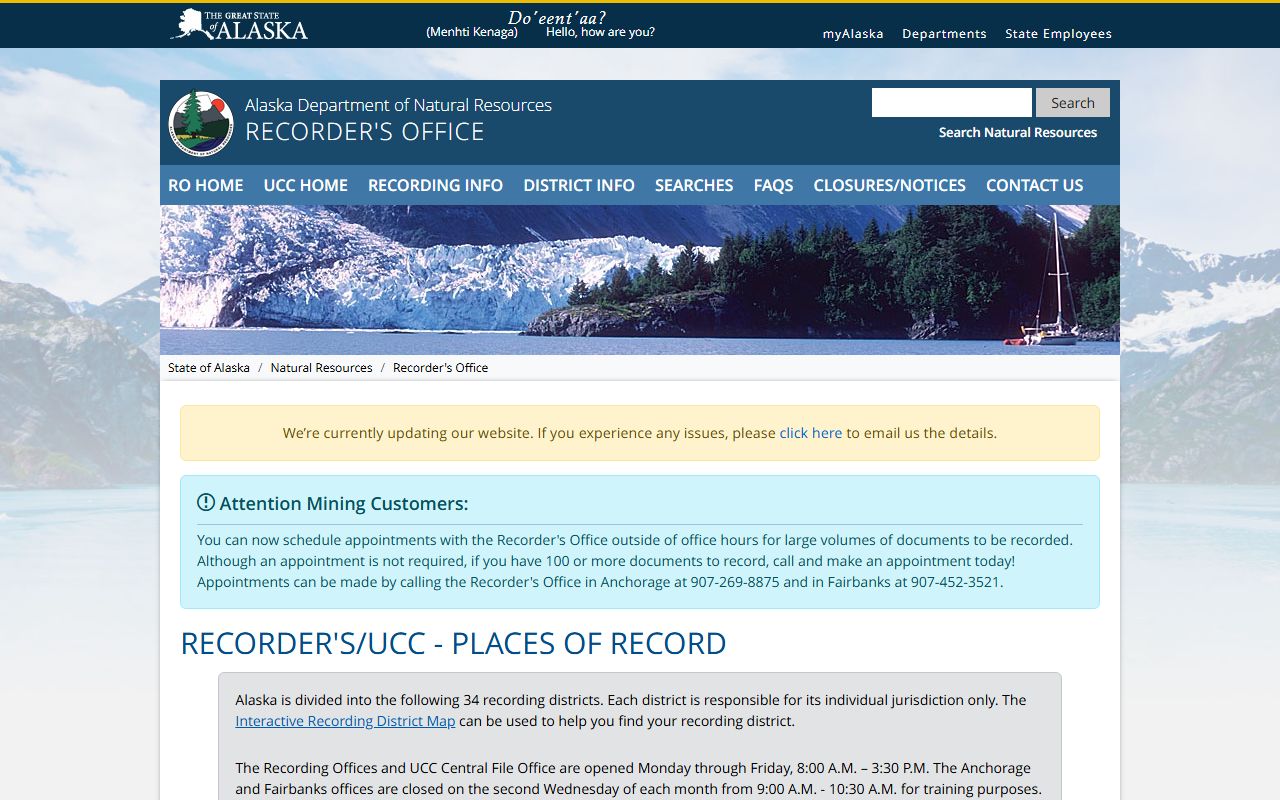
The DNR district list confirms the Anchorage Recording District serves the Municipality of Anchorage and more than 20 other recording districts throughout south-central Alaska.
Municipality of Anchorage Property Appraisal Division
Property tax assessment in Anchorage is handled locally by the Municipality's Property Appraisal Division. This office is separate from the DNR and deals with a different set of records. The Appraisal Division assigns assessed values to all real property in the municipality, maintains ownership data, calculates property taxes, and runs the online property search portal. For tax and assessment questions, this is the right office to contact.
The Municipality of Anchorage provides online access to property assessment records. You can search by parcel number, owner name, or property address to view current assessed values, property characteristics like square footage and year built, sales history, and tax payment status. The municipality also maintains interactive GIS mapping for parcel data, zoning, Heritage Land Bank properties, and platting information.
| Office | Municipality of Anchorage Property Appraisal Division |
|---|---|
| Mailing Address | P.O. Box 196650 Anchorage, AK 99519-6650 |
| Phone | (907) 343-6693 |
| Fax | (907) 343-6599 |
| Website | muni.org |
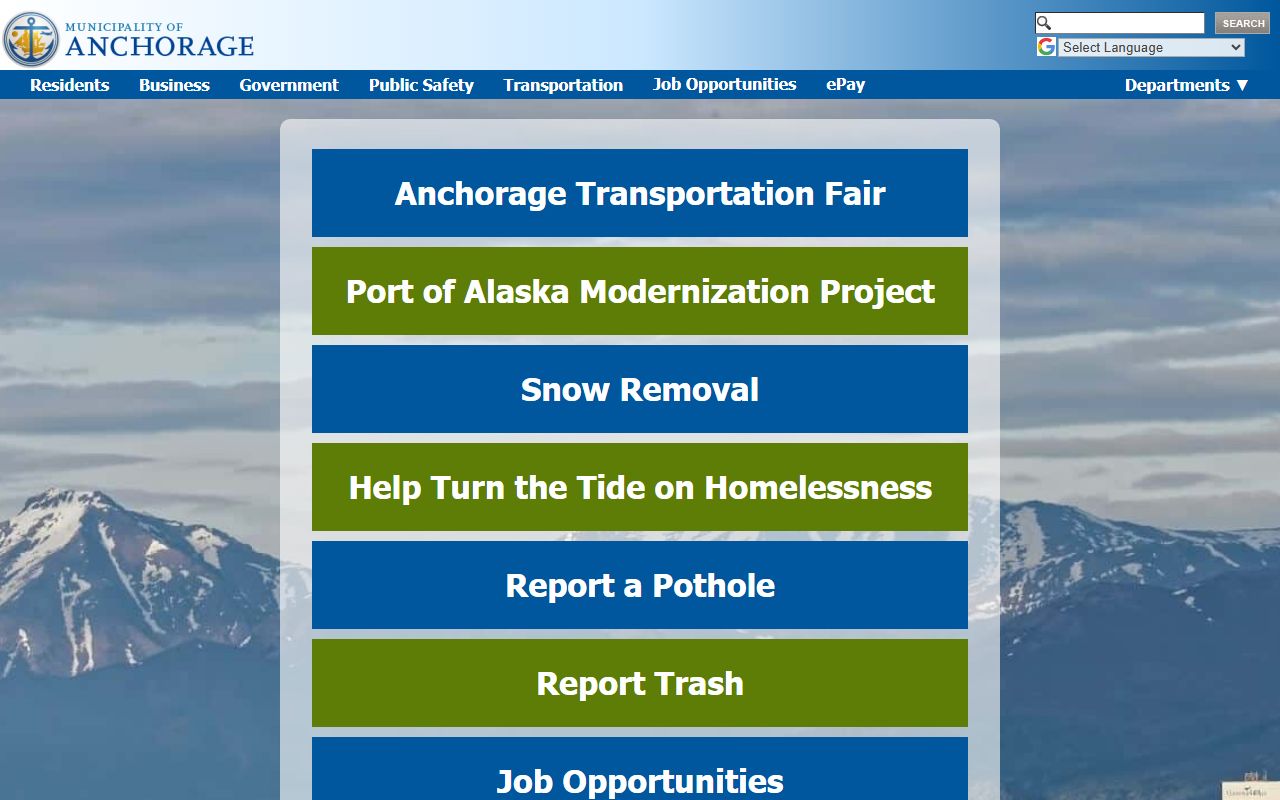
The Municipality of Anchorage website provides online access to property assessments, tax records, GIS parcel maps, and ownership information for properties within the municipality's boundaries.
How to Search Anchorage Property Records Online
For deed and lien records, use the DNR's land records portal at dnr.alaska.gov/landrecords. Search by owner name, document type, file number, or legal description. The index covers documents from 1970 to the present. You can see document types, recording dates, serial numbers, and parties without creating an account. Viewing full document images may require an account or a visit to the office, depending on the age of the record.
For property tax and assessment data, go to the Municipality's online search tool through the muni.org website. Enter a property address, parcel number, or owner name. The system returns the current assessed value, property class, building characteristics, land area, tax amounts, and recent sale prices. This is a free public service and does not require an account.
The DNR also offers an interactive mapping tool at mapper.dnr.alaska.gov. Alaska Mapper lets you query state land ownership and use on a geographic map. It is useful for identifying property boundaries, legal descriptions, and land status. Note that the map is for reference only. For official records, you still need to consult the actual recorded documents at the DNR or the municipality's database.
Note: The online DNR system does not include federal BLM records or ANCSA conveyance documents. For a full title search in the Anchorage area, you may need to consult additional federal and Alaska Native corporation records.
What Anchorage Property Records Include
The DNR Recorder's Office holds recorded instruments for Anchorage properties. These include warranty deeds, quitclaim deeds, and special warranty deeds that transfer ownership. Deeds of trust and mortgages show financing. Assignments of deeds of trust track lender changes. Reconveyances and releases show when loans are paid off. Mechanics liens, judgment liens, federal tax liens, state tax liens, and child support enforcement liens can all encumber Anchorage properties and appear in this system.
The Municipality's Property Appraisal Division holds a different but related set of data. The Appraisal Division tracks assessed values for all real property parcels in the municipality. Each parcel has a record showing owner name and mailing address, parcel number, physical address, legal description, property classification, land area, building square footage, year of construction, improvement details, assessed land value, assessed improvement value, total assessed value, and annual tax amount. The municipality also notes any exemptions that apply, such as senior citizen or disability exemptions.
The municipality maintains records on more than the major assessors in the state. Anchorage's board of equalization hears property tax appeals. Before the municipality introduced appeal fees, there were about 2,500 appeals per year. The fee for appealing an assessment is $30 for properties assessed up to $100,000 and $100 for properties assessed between $100,000 and $500,000. If the board changes your assessment, the fee is refunded.
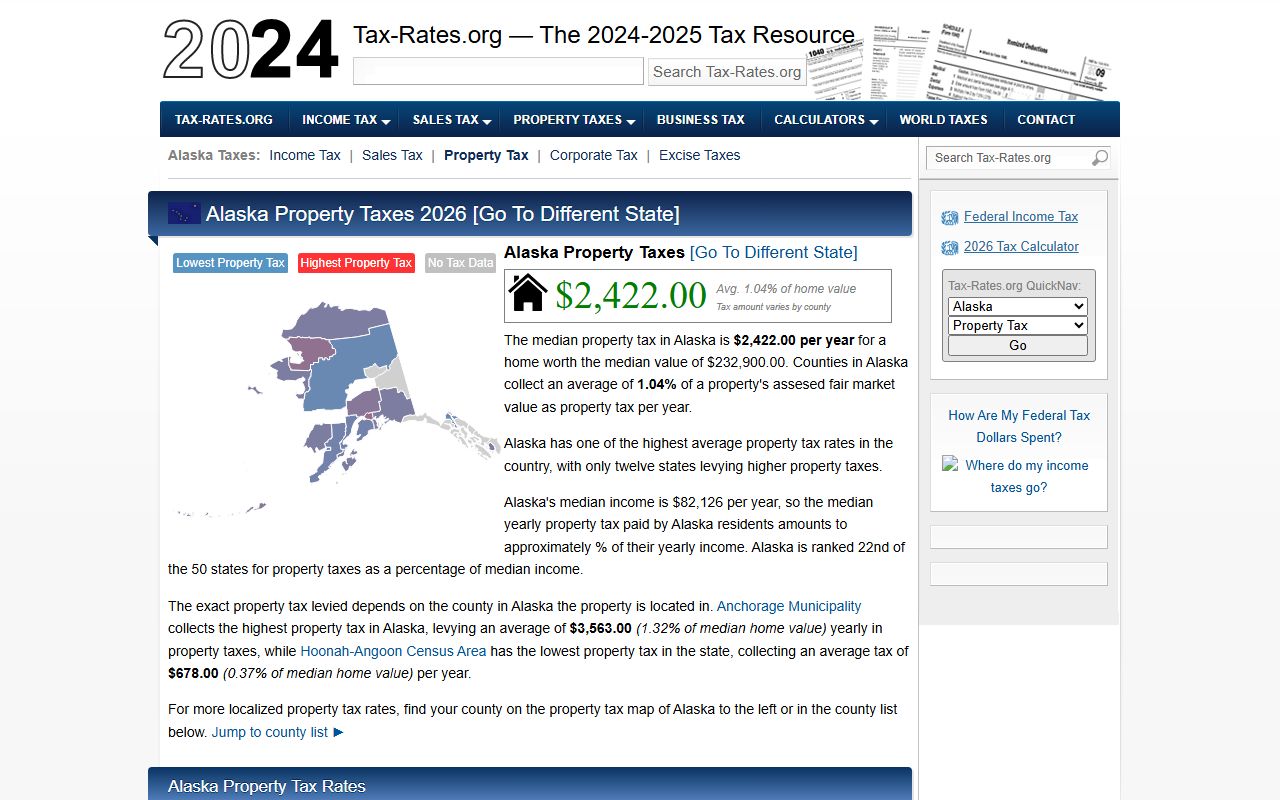
Anchorage property records split between the DNR Recorder's Office for deed and lien instruments and the Municipality's Property Appraisal Division for assessed value and tax data.
Recording Fees for Anchorage Properties
DNR recording fees apply to all documents filed in the Anchorage Recording District. The base fee is $20.00 for the first page of any instrument under AS 40.17.030(a)(10) and 11 AAC 05.200. Each additional page of the same document costs $5.00. The full fee schedule is posted at dnr.alaska.gov/ssd/recoff/Fees. Non-standard documents that fail to meet margin requirements carry an extra $50.00 fee. Documents with two-hole punches at the top also trigger the non-standard fee.
Certified copies of recorded documents cost $5.00 per certification plus copy fees. Plain copies cost $1.25 for the first page and $0.25 per additional page. A conformed copy made at the time of recording is $2.00. Alaska does not charge a real estate transfer tax, so recording fees are the main cost when filing a deed. Checks should be payable to the Department of Natural Resources.
Electronic recording is available through Simplifile, CSC, and ePN. Most title companies in Anchorage are authorized e-recording submitters. If you are a private individual recording a single deed, e-recording may not be directly available to you, but your title company can submit on your behalf for a fee.
Recording Law and Your Rights
Property recording in Anchorage follows Alaska Statutes Title 40, Chapter 17. AS 40.17.010 requires that documents affecting real property be recorded in the district where the property sits. For Anchorage, that is the Anchorage Recording District. Filing in the wrong district does not give valid constructive notice under Alaska law and could affect your priority against later buyers or lenders.
Alaska follows a race-notice recording rule under AS 40.17.060. This means that a later buyer who has no knowledge of a prior unrecorded transfer can gain priority by recording first. If you purchase property in Anchorage, record your deed promptly. Delays can create title problems, especially in a busy market where properties change hands often. AS 40.17.020 establishes that recording a conveyance creates constructive notice to all subsequent purchasers and encumbrancers.
Under AS 40.17.035, the recorder does not evaluate whether a document actually transfers good title. The recorder only checks that the document meets formal filing requirements. This is an important distinction. A deed can be accepted for recording even if it has defects that affect its legal validity. That is why buyers in Anchorage typically use a title company to search prior recorded instruments and issue title insurance before closing.
Cities in Anchorage Municipality
The Municipality of Anchorage is a unified city-borough government. Several communities fall within its boundaries, and all property records for these areas go through the same DNR Anchorage Recording District and the Municipal Property Appraisal Division.
Other communities within the municipality include Chugiak, Girdwood, and Peters Creek. All are served by the same recording and assessment systems.
Nearby Boroughs
These boroughs border or are near the Municipality of Anchorage. Deed recording for each goes through the Alaska DNR system, though different districts may apply.